
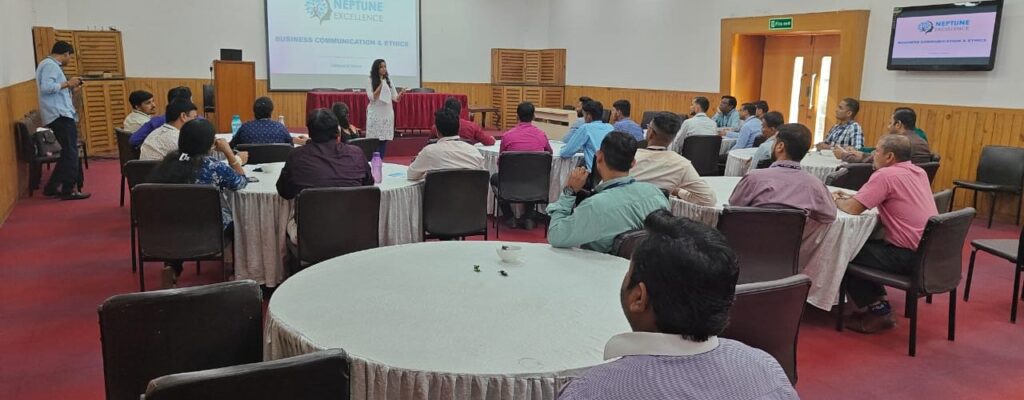
Advanced Time Management & Productivity Workshops
Traditional time management tools fail if the underlying behaviors do not change. Equip your leaders and teams with the psychological frameworks needed to reclaim their focus, set healthy boundaries, and drive high-impact results without the burnout.
The Illusion of “Not Enough Time”
In today’s hyper-connected corporate environment, employees are not failing because they lack calendar apps or to-do lists. They are overwhelmed by constant interruptions, shifting priorities, and the inability to disconnect.
“Not having enough time” is rarely a time issue—it is a boundary, prioritization, and focus issue.
At Neptune Excellence, our time management workshops move beyond superficial life hacks. We use proven coaching methodologies and behavioral science to help professionals identify their unique productivity blocks. We train teams to transition from being reactive “firefighters” to proactive, strategic performers.
The Neptune Excellence Behavioral Approach
As an ICF-credentialed coaching institute, we approach corporate training differently. Led by industry veterans Sanjay Shesh (MCC) and Dhanya Menon (PCC), our workshops integrate advanced coaching psychology to create sustainable behavioral change.
Neuro-Linguistic Programming (NLP): We help participants rewire the subconscious habits that lead to chronic procrastination, perfectionism, and the inability to say “no.”
Emotional Regulation: Poor time management is often a symptom of anxiety or overwhelm. We teach the emotional intelligence required to stay calm and focused in high-pressure environments.
Systems Thinking: We look at how your specific organizational culture (e.g., constant Slack messages, meeting-heavy days) impacts individual productivity, offering systemic solutions for team-wide efficiency.
What Your Team Will Learn
Our workshops are highly interactive, utilizing real-world corporate scenarios. The curriculum can be customized for individual contributors, mid-level managers, or C-suite executives.
Core Modules Include:
- The Matrix of Prioritization: Moving beyond “urgent vs. important” to align daily tasks with long-term strategic KPIs.
- The Art of the Professional “No”: How to assertively set boundaries, delegate effectively, and push back on scope creep without damaging professional relationships.
- Deep Work vs. Shallow Work: Strategies to block out distractions, minimize context-switching, and carve out uninterrupted time for high-cognitive tasks.
- Energy Management: Understanding peak biological productivity windows and combating the afternoon slump to maintain sustained focus.
- Digital Detox Protocols: Managing inbox zero, structuring communication channels, and establishing “right to disconnect” routines to prevent burnout.
Flexible Delivery Formats for Organizations
We structure our workshops to maximize engagement while minimizing operational downtime for your business.
Format: Half-day intensive seminars, full-day immersive workshops, or multi-week modular training.
Audience: Available for enterprise-wide rollouts, departmental teams, or exclusive leadership cohorts.
Delivery: Conducted live online for global/hybrid teams, or in-person at your corporate headquarters.
Frequently Asked Questions About Time Management Training
Traditional techniques fail because they focus purely on logistics—like color-coding calendars—without addressing the behavioral root causes of unproductivity, such as the fear of delegating, chronic perfectionism, people-pleasing, or the inability to manage workplace anxiety.
Corporate time management training directly improves a company's bottom line by increasing output quality, reducing missed deadlines, and lowering employee turnover. When employees know how to manage their workload and establish boundaries, burnout drops significantly.
Yes. In fact, remote and hybrid teams often need specialized time management training the most. Workshops for remote teams focus heavily on asynchronous communication, digital boundary setting, and maintaining visibility and accountability without being micromanaged.